Summary
Transformers are the backbone of modern NLP systems, replacing traditional approaches like RNN and LSTM.
What are Transformers and how do they work?
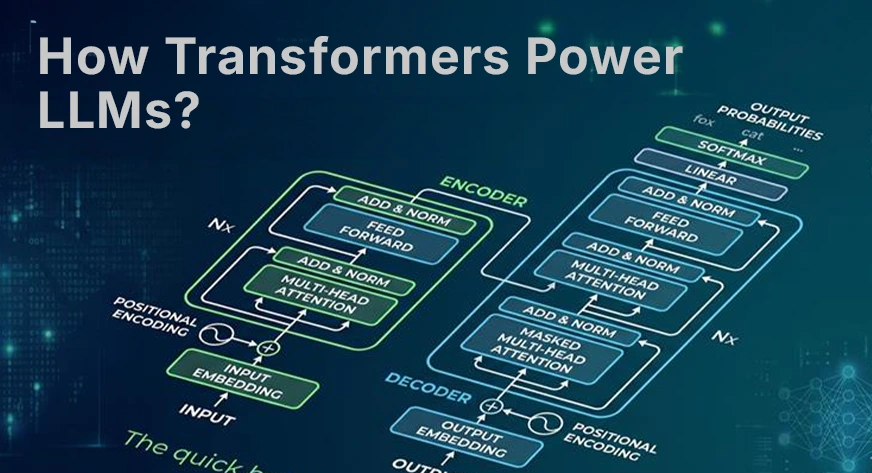
Transformers are a powerful technology for natural language processing and are used in advanced language models like GPT and Gemini. They enable systems to process text in parallel, increasing the efficiency and scalability of language modeling. The article provides a step-by-step explanation of how Transformers operate, focusing on text representation, self-attention, and multi-head attention.
Importance for the BI market
For BI professionals, it is crucial to understand how Transformers are changing the way we approach data analysis and language processing. Competitors in the market are already leveraging these technologies to enhance their analytical capabilities, indicating a shift in the landscape of business intelligence. The trend towards advanced AI solutions and natural language processing is undeniable, presenting new opportunities for data-driven decision making.
Concrete takeaway for BI professionals
BI professionals should explore the capabilities of Transformers and consider how this technology can enhance their datasets and analytical methods. Staying informed about developments in LLMs is essential, along with investigating how existing tools can integrate with these advanced technologies.
Deepen your knowledge
Knowledge Base
AI in Power BI — Copilot, Smart Narratives and more
Discover all AI features in Power BI: from Copilot and Smart Narratives to anomaly detection and Q&A. Complete overview ...
Knowledge BaseChatGPT and BI — How AI is transforming data analysis
Discover how ChatGPT and generative AI are changing business intelligence. From generating SQL and DAX to automating dat...
Knowledge BasePredictive Analytics — What can it do for your business?
Discover what predictive analytics is, how it works, and how to apply it in your business. From the 4 levels of analytic...