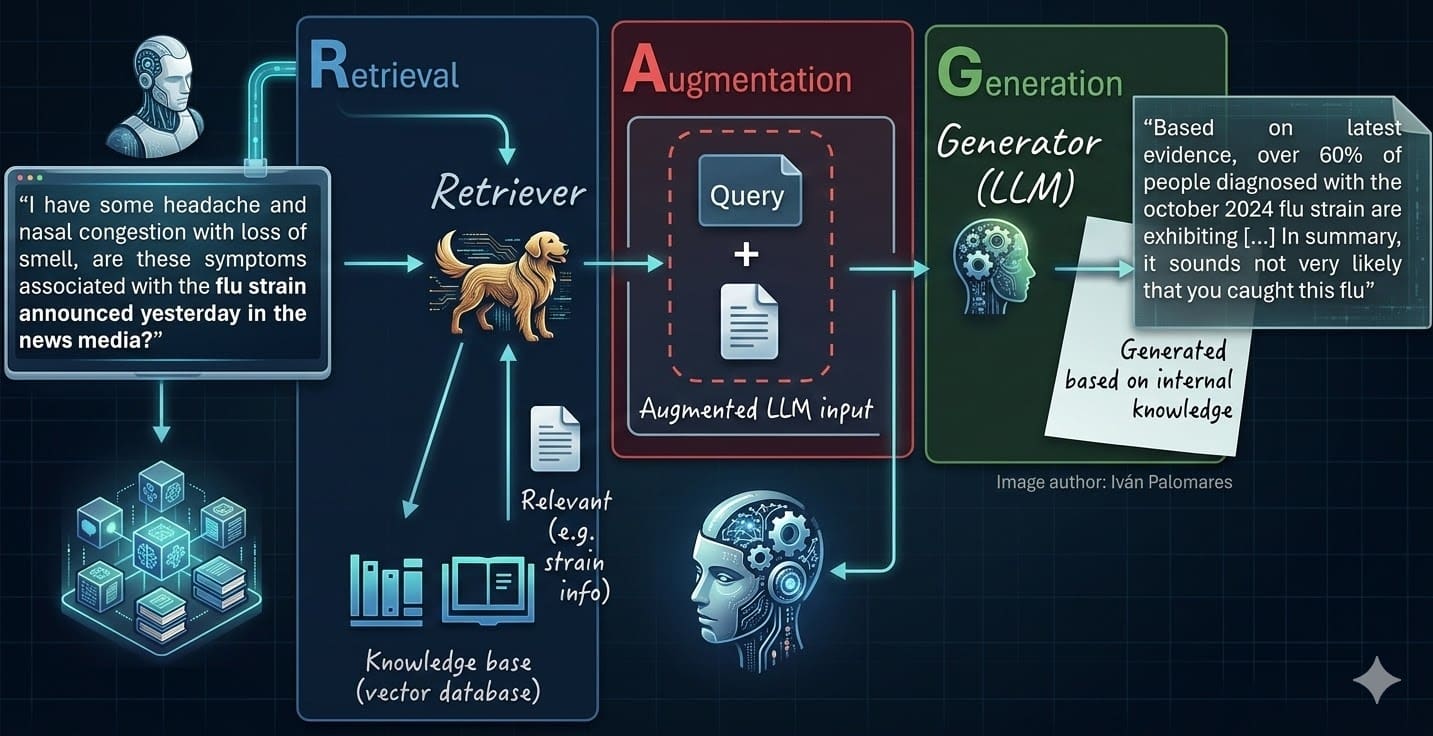
Summary
Retrieval-Augmented Generation (RAG) offers powerful capabilities for data analysis, and businesses must master these techniques.
How RAG Works
There is growing attention for Retrieval-Augmented Generation, an innovation that enhances language models by linking them to external data sources. This enables organizations to generate more accurate and contextually relevant information. The seven steps necessary for mastering RAG include selecting the right datasets, setting up indexing techniques, and integrating feedback mechanisms.
Importance for BI Professionals
For BI professionals, this development represents a shift towards more dynamic and contextual data processing. Competitors such as OpenAI and Google are offering similar technologies, making the understanding and application of RAG in the BI landscape increasingly urgent. RAG aligns with the broader trend of AI-driven data analytics, which can improve the efficiency and accuracy of business decisions.
Takeaway for Professionals
BI professionals should delve into RAG architectures and implement the seven steps into their workflows. This can not only enhance the quality of analyses but also boost the innovation capacity of the entire organization.
Deepen your knowledge
Knowledge Base
AI in Power BI — Copilot, Smart Narratives and more
Discover all AI features in Power BI: from Copilot and Smart Narratives to anomaly detection and Q&A. Complete overview ...
Knowledge BaseChatGPT and BI — How AI is transforming data analysis
Discover how ChatGPT and generative AI are changing business intelligence. From generating SQL and DAX to automating dat...
Knowledge BasePredictive Analytics — What can it do for your business?
Discover what predictive analytics is, how it works, and how to apply it in your business. From the 4 levels of analytic...