Summary
Spotter Semantics Bridges the Gap Between AI Agents and Data Platforms
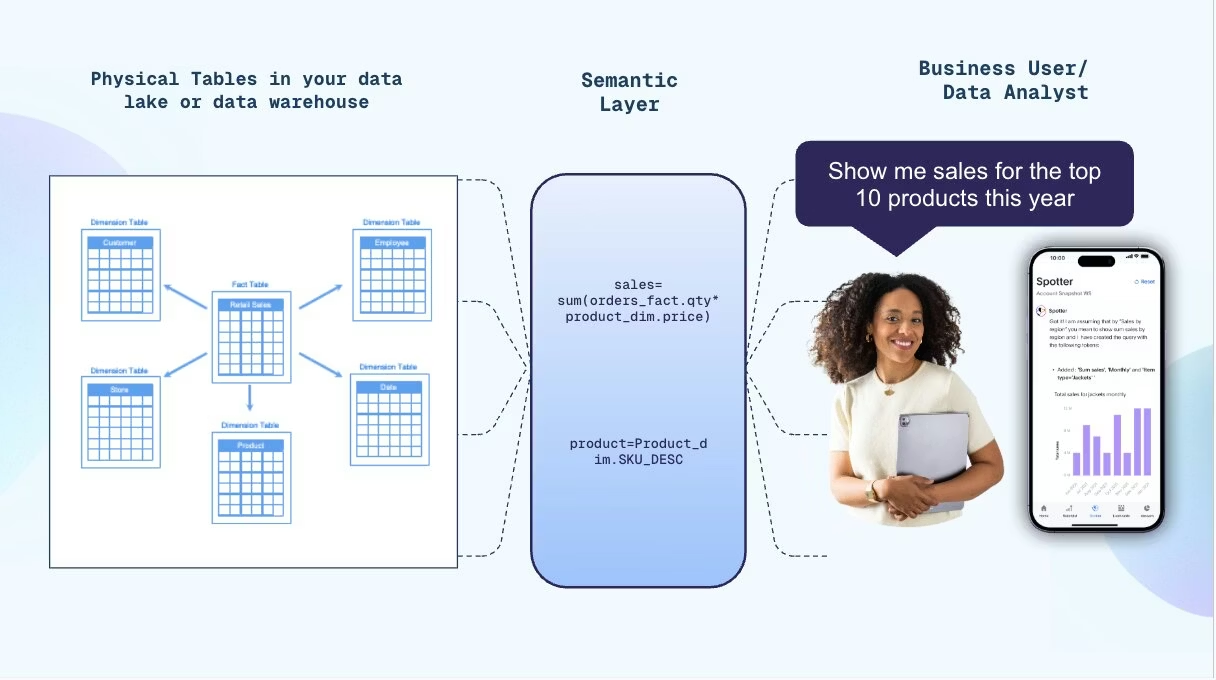
ThoughtSpot launches Spotter Semantics, a semantic translation layer that enables AI agents to communicate with any data platform seamlessly.
Spotter Semantics acts as a Rosetta Stone for agentic AI, translating natural language into a standardized semantic layer that diverse data sources and tools can understand. Just as the original Rosetta Stone connected three scripts, this technology maps user intent to the correct data sources regardless of the underlying platform or query language.
Why This Matters for BI Professionals
Semantic layers are becoming critical as AI agents take on more data analysis tasks. A unified translation layer prevents each agent from having to relearn how specific data sources work, accelerating AI-driven analytics deployment and reducing data misinterpretation risks.
Key Takeaway
Evaluate how a semantic layer can strengthen your current BI architecture. Explore whether Spotter Semantics integrates with your existing ThoughtSpot environment or other analytics platforms.
Deepen your knowledge
Knowledge Base
Data-Driven Work — How to get started as an organization
Learn how to become a data-driven organization. From data maturity to culture change: a practical step-by-step guide wit...
Knowledge BaseChatGPT and BI — How AI is transforming data analysis
Discover how ChatGPT and generative AI are changing business intelligence. From generating SQL and DAX to automating dat...
Knowledge BaseWhat is Business Intelligence? Definition, examples and tools
What is business intelligence (BI)? Learn about the definition, BI stack, real-world examples, popular tools, and 2026 t...
Related articles

SpotCache: Scale AI-ready data without cloud-spend surprises
SpotCache provides a solution for data leaders struggling with unpredictable cloud costs associated with AI usage. This ...
Data and AI Trends 2026: Predictions for Agentic AI Production
Agentic AI is quickly transitioning from experiments to practical applications, impacting workflows that drive decisions...
Reimagine Data Prep for the Agentic Era with Analyst Studio
ThoughtSpot has introduced Analyst Studio, a collaborative workspace for preparing and managing AI-ready data. This tool...
How ThoughtSpot Is Powering the Agentic Analytics Growth Across EMEA
ThoughtSpot is driving the growth of Agentic Analytics in EMEA by helping companies gain instant, actionable insights.