
Summary
Correlation and causation are clarified with Propensity Score Matching, which measures the real impact of business decisions.
Correlation vs. Causation: what happens
Recent research highlights the importance of Propensity Score Matching in measuring causality in observational data. This technique, which utilizes "statistical twins," helps eliminate selection bias and reveals the true impact of interventions.
Why this is important
For BI professionals, understanding the distinction between correlation and causation is crucial. Many analyses fail because they only identify correlation without recognizing the underlying cause. Employing techniques like Propensity Score Matching provides opportunities to enhance the reliability of analyses and reduces the risk of erroneous conclusions. Competitors who stick to traditional statistical methods may fall behind in insights and strategic decision-making.
Concrete takeaway
BI professionals should invest in training around Propensity Score Matching and similar techniques to improve the quality of their data analysis. Carefully measuring causality can lead to better business decision-making.
Deepen your knowledge
Knowledge Base
Predictive Analytics — What can it do for your business?
Discover what predictive analytics is, how it works, and how to apply it in your business. From the 4 levels of analytic...
Knowledge BaseWhat is Power BI? Everything you need to know
Discover what Microsoft Power BI is, how it works, what it costs, and why it's the world's most popular BI tool. Complet...
Knowledge BaseAI in Power BI — Copilot, Smart Narratives and more
Discover all AI features in Power BI: from Copilot and Smart Narratives to anomaly detection and Q&A. Complete overview ...
Related articles

Using Causal Inference to Estimate the Impact of Tube Strikes on Cycling Usage in London
Causal inference gains new insights into the effects of strikes on cycling usage in London.

The Data Team’s Survival Guide for the Next Era of Data
Six pillars for data teams to simplify their stack and prepare for AI agents as primary data consumers.
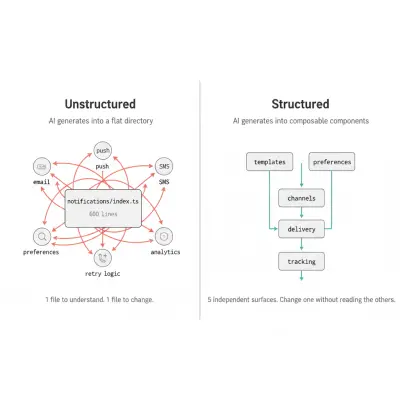
The Black Box Problem: Why AI-Generated Code Stops Being Maintainable
Why AI-generated code becomes unmaintainable without structure, and how structured generation solves this problem.

What Makes Quantum Machine Learning “Quantum”?
What makes Quantum Machine Learning 'quantum'? An overview of the current state and potential applications.