Summary
Operational databases provide new insights into data usage for transactions. This improves efficiency and data processing.
Operational databases: how they work
Operational databases, also known as online transaction processing (OLTP) databases, are designed to efficiently process daily transactions. These databases support real-time data entry and processing, making them crucial for organizations that require immediate insights into their operational data. They employ complex structures to ensure both speed and integrity of transactions.
Why this is important
For BI professionals, operational databases are fundamentally important as they form the backbone for data-driven decision making. The rise of real-time analytics and integration with data warehouses highlights a clear trend towards more sophisticated data flows. Competitors in the market, such as NoSQL databases and data lake solutions, offer alternatives, but the robustness of OLTP databases remains appealing to many organizations. This emphasizes the necessity of working with operational databases and how they align with broader BI strategies.
Concrete takeaway
A BI professional should focus on optimizing the interaction between operational databases and analytics tools, such as data visualization solutions. It is essential to understand the data flows and processes so that insights can be effectively utilized.
Deepen your knowledge
Knowledge Base
Data Lakehouse Explained — The best of both worlds
What is a data lakehouse and why does it combine the best of data warehouses and data lakes? Architecture, comparison, a...
Knowledge BaseETL Explained — Extract, Transform, Load in plain language
What is ETL? Learn how Extract, Transform, and Load works, the difference with ELT, and which tools to use. Clearly expl...
Related articles
Cursor V3 Explained: The AI Coding Agent That’s Replacing Traditional IDEs in 2026
Cursor V3 introduces AI-driven coding that replaces traditional IDEs in 2026.
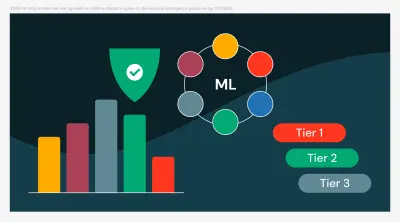
Model Risk Management in 2026: A Banker’s Guide to the Revised Interagency Guidance
Model risk management receives new guidelines that help the financial sector better assess opportunities and risks.
OpenAI GPT-5.5 now available on Databricks, fully-governed through Unity AI Gateway
Databricks introduces OpenAI GPT-5.5, fully governed through the Unity AI Gateway, enhancing enterprise AI capabilities.
Have we reached a point where not having GenAI knowledge leads to automatic rejection in interviews?
Lack of GenAI knowledge can lead to automatic rejections in job interviews, making it essential for candidates to upskil...