Why Your AI Search Evaluation Is Probably Wrong (And How to Fix It)
A five-step framework for building rigorous, reproducible AI search benchmarks — before you make six-figure infrastructure decisions The p…
50 articles
A five-step framework for building rigorous, reproducible AI search benchmarks — before you make six-figure infrastructure decisions The p…
From one model to managing a massive portfolio: What 10 years in the industry taught me The post Machine Learning at Scale: Managing More Th…
Compile native, standalone applications using the Python syntax you already know. The post Write C Code Without Learning C: The Magic of P…
What if natural language is not the best abstraction for driving? The post LatentVLA: Latent Reasoning Models for Autonomous Driving appeare…

Why traditional RAG loses context and how contextual retrieval improves search result accuracy.

Five classic data science skills are becoming scarce in tech. A 90-day plan to build them while AI dominates attention.
Sarvam Edge brings on-device AI to India: works offline, speaks local languages, and protects privacy on the device.

What makes Quantum Machine Learning 'quantum'? An overview of the current state and potential applications.
GPT-5.4 tested: the most powerful ChatGPT model yet, with improvements in reasoning, coding, and everyday tasks.

Six pillars for data teams to simplify their stack and prepare for AI agents as primary data consumers.

Why AI-generated code becomes unmaintainable without structure, and how structured generation solves this problem.

Practical guide to writing production-grade code with Claude Code and other coding agents.

GPT-5.3 Instant update makes the model more useful for daily tasks with smoother and more helpful conversations.

Google's NotebookLM gets cinematic video overviews: a new way to visually summarize research notes.

Explanation of Zero Redundancy Optimizer (ZeRO) and FSDP for multi-GPU AI training, including PyTorch implementation.

Why human work remains valuable in an AI world: an analysis of the unique contribution of people alongside artificial intelligence.

PhysicEdit teaches image editing models to respect the laws of physics during physical interactions in images.

Five methods for variable discretization: converting continuous variables to discrete values for better modeling.

Why 80% of ML projects fail due to poor problem definition. A 5-step protocol to define the right problem.
Guide to time series cross-validation: techniques that preserve temporal integrity for reliable predictions.

Why enterprise AI projects get stuck in the prototype stage and how to move from prototype to production.

Explanation of keyword search, TF-IDF, and BM25 in the context of RAG with hybrid search methods for better AI retrieval.

Visual explanation of graph coloring algorithms with Python, useful for optimization problems in data science.

Why you should avoid loops in Pandas: column-oriented thinking for faster and more professional data processing.

Four lessons from leaving an ML Engineer job: Insights on the realities behind dream tech jobs.
Comparison of OpenClaw vs Claude Code in 2026: open-source flexibility versus Anthropic's ready-made AI coding agent.

Comparing Agentic RAG and Classic RAG: when to choose adaptive retrieval loops versus simple pipelines.
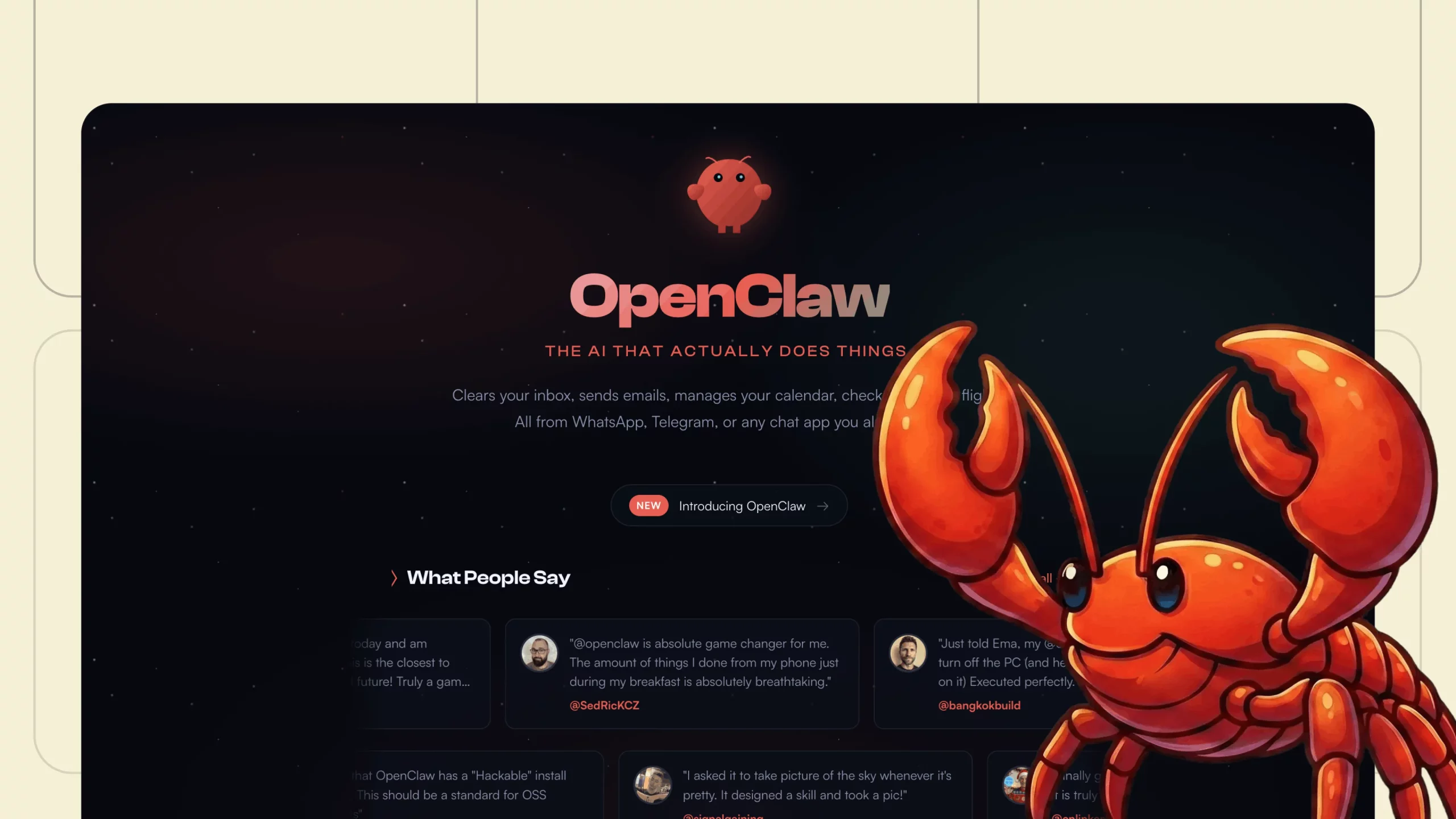
Twenty OpenClaw prompts to automate daily tasks and workflows with autonomous AI agents.

Technical walkthrough of the YOLOv3 paper with a PyTorch implementation of the architecture from scratch.

Monthly ML lessons February 2026: knowledge sharing, documentation and MLOps as core topics for data professionals.

Guide to building APIs with FastAPI: path operations, Pydantic models, dependency injection, and automatic documentation.
Ten best YouTube channels to learn Generative AI, selected for educational quality and practical usefulness.

Towards Data Science is adjusting the author payment program with higher fees and more articles per month.
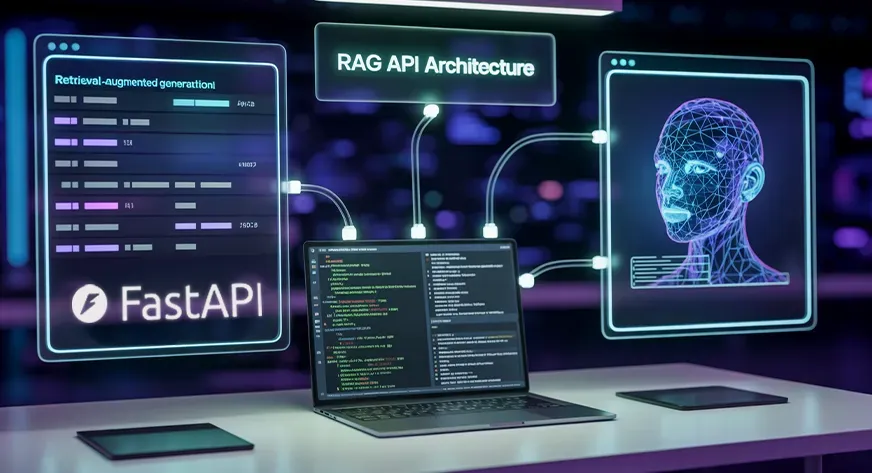
Tutorial: building a RAG API with FastAPI to make PDF reports searchable using generative AI.

Caching architectures for Agentic RAG that reduce LLM costs by 30% through validation-aware, multi-tiered caching.
Rick Beato shares his ranking of the greatest guitarists of all time and reflects on the history and future of music.
Peter Steinberger launched OpenClaw, a viral open-source AI agent that quickly became the fastest-growing project on GitHub.
Lex Fridman discusses the state of AI in 2026 in podcast #490: LLMs, scaling laws, AI agents, and the path to AGI.
Lex Fridman talks with naturalist Paul Rosolie about uncontacted tribes in the Amazon and wildlife conservation.
Lex Fridman talks with a mathematician about infinity, paradoxes, and Gödel's incompleteness theorems.
Lex Fridman talks with Irving Finkel about ancient civilizations, clay tablets, and deciphering ancient languages.
Biologist Michael Levin discusses with Lex Fridman how biological life possesses a hidden intelligence that challenges our understanding of …
Nuclear fusion engineer David Kirtley of Helion Energy discusses the future of fusion and the path to clean energy.
Dan Houser, co-founder of Rockstar Games, shares his vision on the creative future of gaming after GTA and Red Dead Redemption.
Criminal psychologist Julia Shaw discusses psychopathy, memory, and the dark side of human behavior.
Telegram founder Pavel Durov talks about freedom, censorship, power, and the future of private communication.
Historian Norman Ohler reveals the role of drugs in the Third Reich, from Hitler's personal use to the Blitzkrieg.
Paleontologist Dave Hone discusses T-Rex, dinosaurs, extinction, and the scientific accuracy of Jurassic Park.
Former Microsoft engineer Dave Plummer shares stories about Windows 95, Task Manager, and the programmer's life.
Scott Horton argues against warfare and criticizes the military-industrial complex in the United States.