
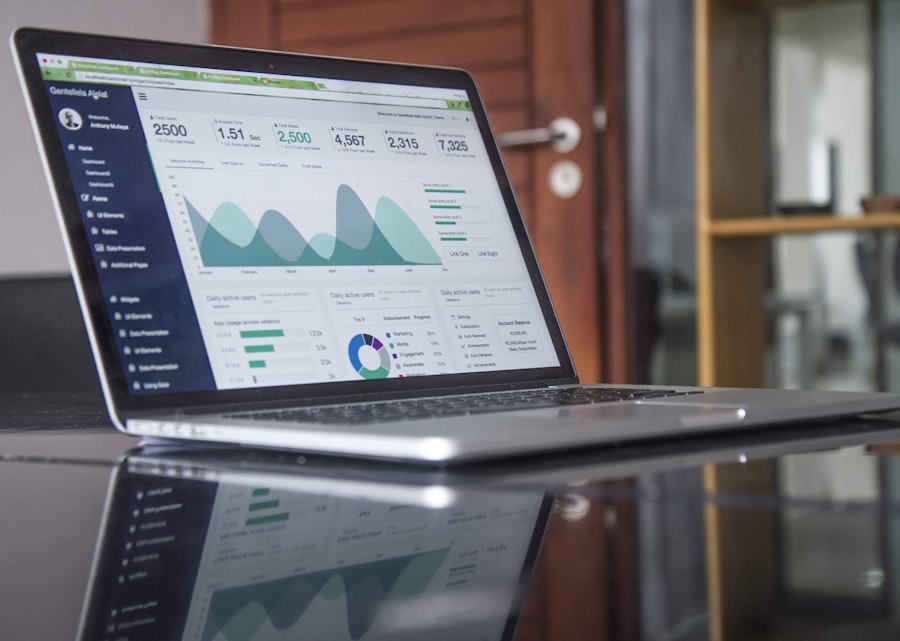
What is Business Intelligence?
Business Intelligence (BI) is an umbrella term for the technologies, processes, and strategies that organizations use to turn raw data into actionable insights. The goal: making better decisions based on facts rather than gut feeling.
BI covers the entire journey from collecting data to presenting insights. This includes extracting data from various systems (ERP, CRM, e-commerce), cleaning and combining it, and visualizing it in dashboards and reports that everyone in the organization can understand.
Thanks to modern tools like Power BI, Tableau, and Qlik, BI is no longer reserved for large enterprises with deep pockets — SMBs can leverage it just as effectively.
The BI stack: from data to decisions
A complete BI solution consists of multiple layers working together — the BI stack:
- Data sources — ERP systems (SAP, Oracle), CRM (Salesforce, HubSpot), databases, Excel files, APIs, IoT sensors, and more.
- ETL / Data integration — Extract, Transform, Load: pulling data from sources, cleaning it, and loading it into central storage. Tools: Azure Data Factory, SSIS, Fivetran, dbt.
- Data Warehouse / Lakehouse — Central storage optimized for fast queries. Examples: Azure Synapse, Snowflake, BigQuery, Microsoft Fabric Lakehouse.
- Data model / Semantic layer — A structured layer defining relationships between tables and calculations (measures, KPIs). Ensures consistent definitions across the organization.
- Visualization / Reporting — Interactive dashboards, reports, and scorecards that make insights tangible.
- Consumption / Action — End users view reports, ask questions, export data, and make decisions. Increasingly, insights are also processed automatically via alerts and triggers.
Real-world examples
BI is used across virtually every industry:
- Retail — Monitor inventory levels per store, measure promotion effectiveness, analyze customer behavior. Result: less waste, better shelf placement, targeted offers.
- Healthcare — Wait time analysis, bed occupancy rates, quality indicators, disease monitoring dashboards.
- Government — Open data dashboards for citizens: crime statistics, air quality, housing development progress, budget monitoring.
- Finance — Risk analysis, fraud detection, customer segmentation, compliance reporting. Real-time dashboards monitor transaction volumes and anomalies.
- Logistics — Route analysis, delivery times, fuel consumption, vehicle utilization across the entire supply chain.
BI vs. Data Analytics vs. Data Science
These terms are often used interchangeably, but there are key differences:
| Business Intelligence | Data Analytics | Data Science | |
|---|---|---|---|
| Question | What happened? | Why did it happen? | What will happen? |
| Focus | Reporting & monitoring | Analysis & explanation | Prediction & modeling |
| Output | Dashboards, KPIs | Insights, recommendations | Models, algorithms |
| User | Manager, analyst | Data analyst | Data scientist |
| Tools | Power BI, Tableau, Qlik | SQL, Python, R | Python, TensorFlow, scikit-learn |
Popular BI tools
The market is dominated by a handful of platforms:
- Microsoft Power BI — Market leader, tightly integrated with the Microsoft ecosystem. Free Desktop version, Pro from €9.40/month. Read more about Power BI.
- Tableau — Known for powerful visualizations and intuitive drag-and-drop interface. Owned by Salesforce. Starts at $75/user/month.
- Qlik Sense — Unique associative engine that automatically discovers relationships in data. Popular with technically-minded organizations.
- Looker (Google Cloud) — Cloud-native BI with a unique modeling layer (LookML). Strong for organizations already on Google Cloud.
- SAP Analytics Cloud — The BI solution for SAP-heavy organizations. Combines BI, planning, and predictive analytics.
- ThoughtSpot — AI-first approach: ask questions in natural language and get instant visualizations.
BI trends in 2026
Key trends shaping business intelligence in 2026:
- AI-powered analytics — LLMs are being integrated into BI tools. Users can ask questions in natural language and get instant visualizations. Microsoft Copilot in Power BI is a prime example.
- Self-service BI — The shift from IT-driven reporting to business users creating their own analyses continues to accelerate.
- Unified data platforms — The boundary between data warehouse, data lake, and BI is blurring. Platforms like Microsoft Fabric and Databricks offer everything in one place.
- Real-time BI — Organizations no longer want to wait for nightly batch updates. Real-time dashboards are becoming the norm.
- Data governance — As self-service BI grows, so does the need for governance: who can access which data, and which definitions are used.
- Embedded analytics — BI insights are increasingly built directly into the applications people use daily: CRM, ERP, HR systems.